

Back to Baseline: What Q1 2026 Tells Us About the Australian Business Sales Market
Published by Xcllusive Business Sales
After a bruising second half of 2025, the Australian business sales market Q1 2026 offered something it had not seen in a while: stability. Buyer enquiry returned to average. Listing supply steadied. Vendor hesitance stayed low. The market is not surging. It is no longer sliding either.
For accountants advising business owners on exit, for owners weighing whether now is the right time to sell, and for buyers actively searching, the Q1 2026 numbers are worth understanding. They describe a cleaner, more deliberate market than the one we had a year ago.
Here is what our Q1 2026 Market Pulse is showing.
1. Listings are holding their ground
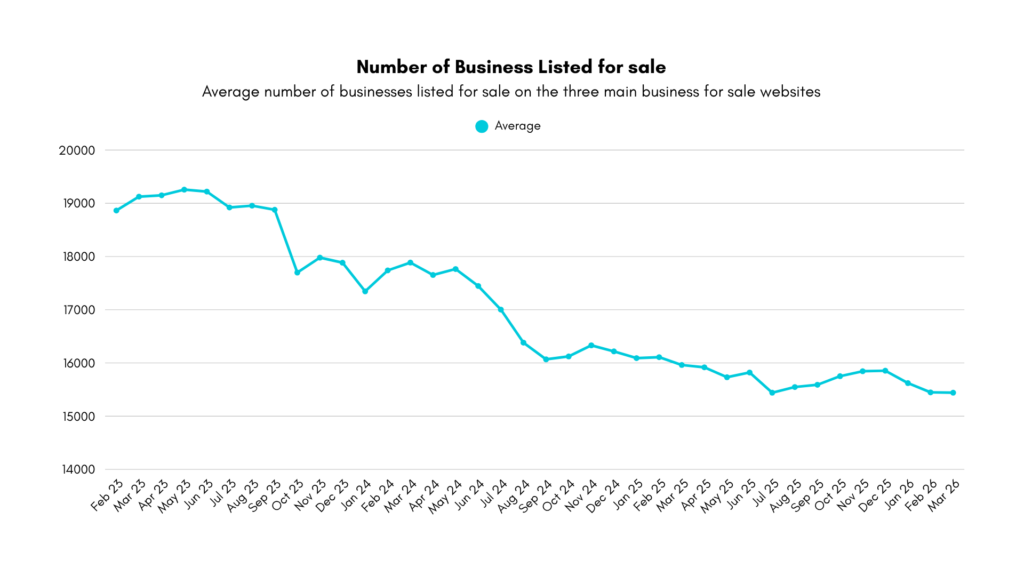
After a sustained decline through much of 2025, the number of businesses coming to market held broadly stable through Q1 2026. Data gathered across the three major Australian business-for-sale websites shows the line has flattened, with March figures sitting almost level with February.
What this means for buyers: the pool of available businesses is not shrinking further. If you have been waiting for supply to stabilise before committing to a search, that stabilisation has now happened.
What this means for sellers: competition for buyer attention remains real. A steady supply pool means well-presented listings continue to stand out, but poorly presented listings will still sit. Preparation is the difference.
2. Buyer enquiry is back at baseline
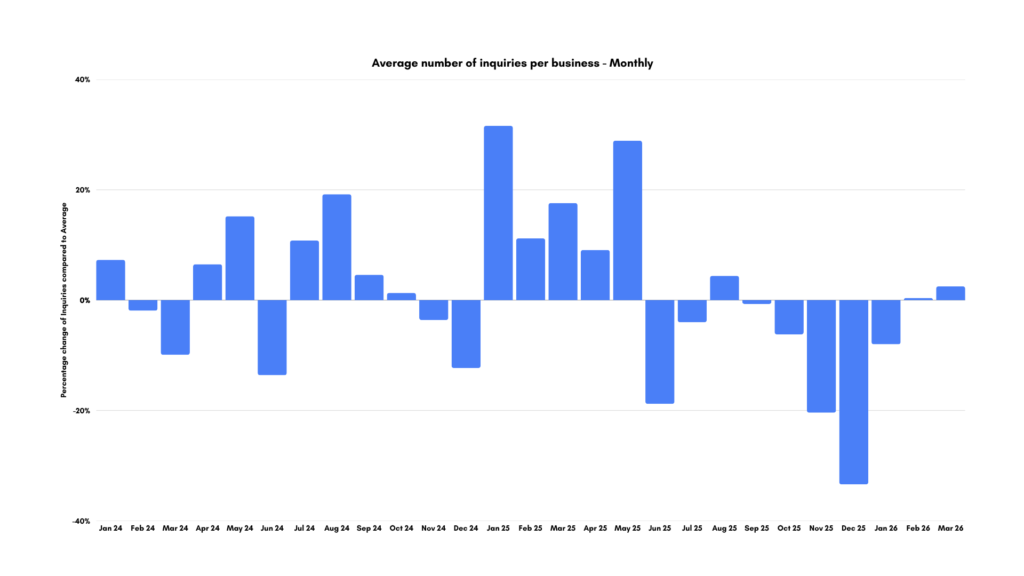
After two consecutive quarters of below-average buyer enquiry through the back half of 2025, Q1 2026 brought enquiry rates back to their long-run average. January came in slightly below the baseline, February nearly flat, and March tipped above average for the first time since mid-2025.
The industries drawing the strongest enquiry through Q1 were essential services, trades, and wholesale operations. This is a familiar pattern in stabilising markets: buyers gravitate toward businesses with predictable demand, established client bases, and recession-tested revenue models before they move into more discretionary sectors.
What this means for owners in these sectors: you are likely to see meaningful enquiry activity through Q2. If you have been considering listing, this is the right moment to have financials, systems, and exit planning ready to go.
3. Vendors are taking longer than ever to commit
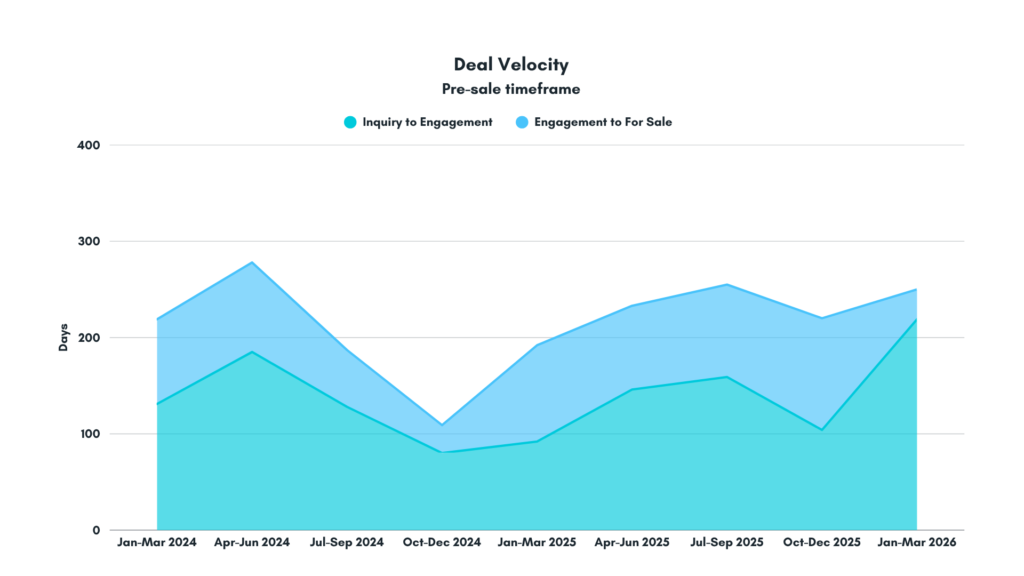
One of the more striking findings from Q1 2026 is the time it takes a vendor to move from their first conversation with us to signing an engagement agreement. That timeframe has reached its longest recorded level.
This points to owners who are not in a rush. The reasons vary: financials that are not yet ready, no immediate personal urgency to sell, genuine uncertainty about whether now is the right moment, or a slow arrival at the emotional decision to actually sell.
However, once a vendor does commit, they move faster than ever. The average time from signing an engagement agreement to the business being live and on the market is sitting at just 31 days.
What this means for accountants advising exit planning: the “considering it” phase now takes longer than the “doing it” phase. That reshapes how you counsel clients. Rather than urging them to decide faster, help them use the extended consideration window productively, get the financials clean, get the systems documented, get the succession thinking done. When they do commit, they are ready to move.
4. Vendor hesitance is holding low
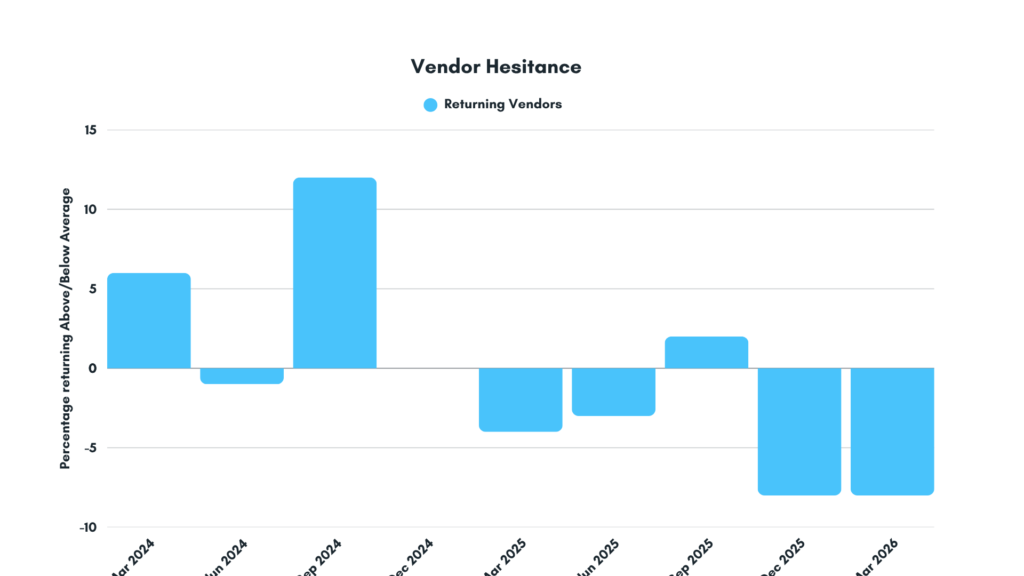
The proportion of returning vendors, owners who previously investigated a sale but did not proceed and are now revisiting, remains well below the long-run average for the second consecutive quarter.
This is a strong signal. It tells us that the owners who came to market in Q1 were largely prepared and committed. They were not testing the water. They were not chancing it. They had done the work.
What this means: the quality of vendor engagement in the current market is high. For buyers, this reduces the risk of engaging with listings that get pulled mid-process. For accountants, it validates the value of proper pre-sale preparation. Prepared vendors sell.
5. Offers are rising, but still below last year
Once a business is listed, the time to receive an offer extended slightly in Q1 2026 compared to Q4 2025. Buyers are taking a little longer to move from interest to offer. However, once an offer is on the table, due diligence and settlement phases remained consistent with the previous quarter.
Importantly, Q1 2026 on-market timeframes are still shorter than the same quarter last year. Despite the small quarter-on-quarter softening, the year-on-year picture is one of a market that has continued to improve on the deal velocity front.
What this means: well-presented businesses with clean financial records and clear operating documentation continue to attract serious buyers faster than the market average. The gap between a “market average” listing and a “well-prepared” listing is widening.
What this means for your clients
If you are an accountant advising business owners on exit planning, three takeaways matter from the Q1 data.
First: the market has stabilised. The story of 2025 was one of sliding activity on both sides. That slide has stopped. Q1 2026 shows a market that has found its footing. The advice “wait for stability” is now retrospective; the stability has already arrived.
Second: preparation is the single largest variable. In a market where vendor hesitance is low and buyers are discerning, the businesses that sell well are the ones that arrive prepared. Financial statements clean, add-backs documented, systems captured, customer concentration understood, transferable value clear. Six to twelve months of preparation work still separates a business that attracts serious offers from a business that sits.
Third: the extended consideration window is a gift, not a delay. If your clients are taking longer than they used to before signing an engagement, use that window. The best time to work on transferable value is before the “I am ready to sell” decision, not after it.
Bottom line
The Q1 2026 numbers describe a market finding its footing. Enquiries are back at baseline. Listings have stabilised. Vendors who are prepared are engaging cleanly. The slide of 2025 appears to be over.
For owners considering a sale, the window is open but selective. Buyers are active and discerning. Strong financials, early preparation, and clear exit planning remain the difference between a business that attracts offers and one that sits.
Coming up: Q2 2026 briefing
Our Q2 2026 Market Pulse briefing lands in the inboxes of Australian accountants in mid-July. It will show whether the stability we saw in Q1 has held through the second quarter, or whether the picture has shifted again.
If you would like Q2 delivered directly to you when it lands, subscribe to our Accountants Newsletter: Subscribe to the Accountants Newsletter
If you have a client considering a sale in the next 12 to 24 months and want to talk through what a stable market means for their exit timeline, please just call us on 02 9817 3331 or reply to any of our emails.
Keep up to date with what’s happening daily by following Xcllusive on Linkedin