

Tighter Market, Faster Deals: What Q2 2026 Tells Us About the Australian Business Sales Market
Published by Xcllusive Business Sales
If Q1 2026 was the quarter the market stopped sliding, Q2 2026 is the quarter it started making decisions. Listings held steady near multi-year lows. Buyer enquiry per business softened again. But once vendors decided to sell, they moved through the pre-sale phase faster than at any point in the last two years. The result: total deal length dropped meaningfully quarter on quarter, and the front of the pipeline is now moving at record pace.
For accountants advising business owners on exit, for owners weighing whether to list, and for buyers actively searching, the Q2 numbers describe a market that is tighter on volume but faster on decision-making. The prepared move quickly. The unprepared sit.
Here is what our Q2 2026 Market Pulse is showing.
1. Listings hold near the multi-year floor
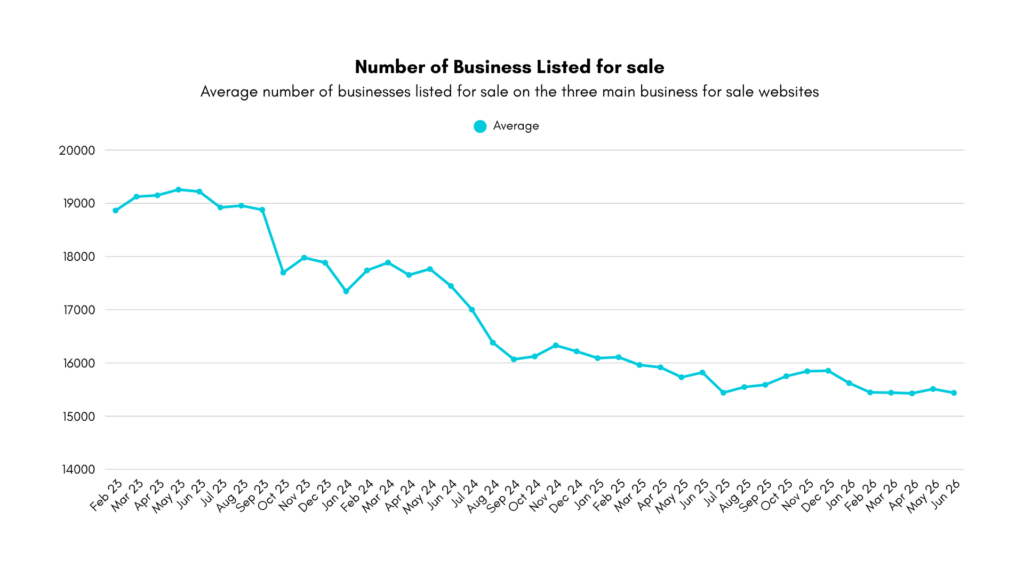
The number of businesses listed nationally through Q2 2026 sat almost flat, around 15,440 in June, effectively level with the March figure. After stabilising through late 2025, the supply pool has now held steady for six consecutive months.
That is the longest stretch of stability we have seen since the run-up in early 2023, when listings hovered near 19,000.
What this means for buyers: the pool of available businesses is not shrinking further, but it is meaningfully smaller than the market average of two years ago. If you have been waiting for supply to loosen before committing to a search, that loosening is not coming. The listings on offer today are the market you have.
What this means for sellers: competition for buyer attention is real, but the field is not swelling. A steady supply pool means well-presented listings continue to stand out. Poorly presented listings will still sit.
2. Buyer enquiry per business runs below average
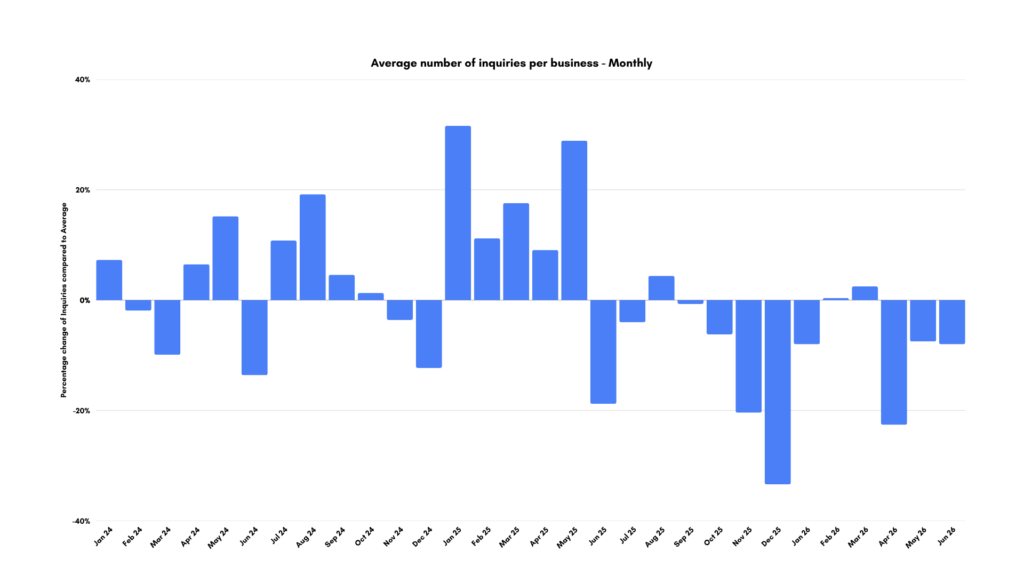
After briefly returning to baseline through Q1 2026, average buyer enquiries per listing softened again in Q2. April, May and June all ran below the long-run average.
This is not a collapse in buyer activity. It is a redistribution. Fewer enquiries spread across each available listing means the premium on standing out has increased. Well-prepared businesses with strong financial records continue to attract the majority of qualified interest. Poorly documented listings feel the softness first.
The industries drawing the strongest enquiry through Q2 remained consistent with Q1: essential services, trades, and wholesale operations. Buyers are still gravitating toward predictable demand and established client bases.
What this means for owners: if your business sits in one of these resilient sectors and your financials are ready, you are competing for buyer attention in a market that rewards preparation more than ever. If your financials are not ready, the market will find you last.
3. Pre-sale velocity is at a record
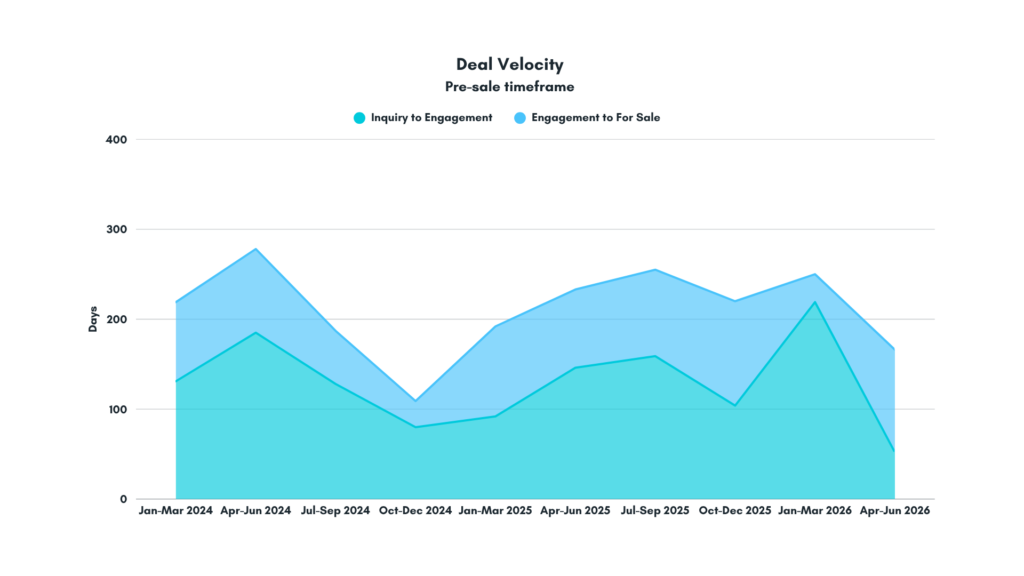
The most striking change in Q2 2026 is at the front of the pipeline. Time from a vendor’s first enquiry to signing an engagement dropped to around 55 days, the shortest figure in the entire ten-quarter dataset we track.
That reverses a Q1 spike where the same figure had climbed above 200 days. Owners who decide to sell in the current market are committing quickly, and once committed, they are moving through the preparation phase efficiently. Total time from initial enquiry to a business being live on market has dropped by more than a third quarter on quarter.
This is a meaningful shift in behaviour. Through 2024 and 2025 we saw owners take longer and longer between first considering a sale and actually starting the process. Q2 2026 tells us that phase has compressed sharply.
What this means for accountants advising exit planning: the window between a client saying “I am thinking about it” and “I am doing it” has shrunk. Clients who used to spend nine months in consideration are now moving in under two. Your pre-sale conversations need to assume a faster tempo than they did a year ago. If a client mentions a sale in a coffee, treat the follow-up as urgent rather than exploratory.
4. Returning vendors above the long-run average
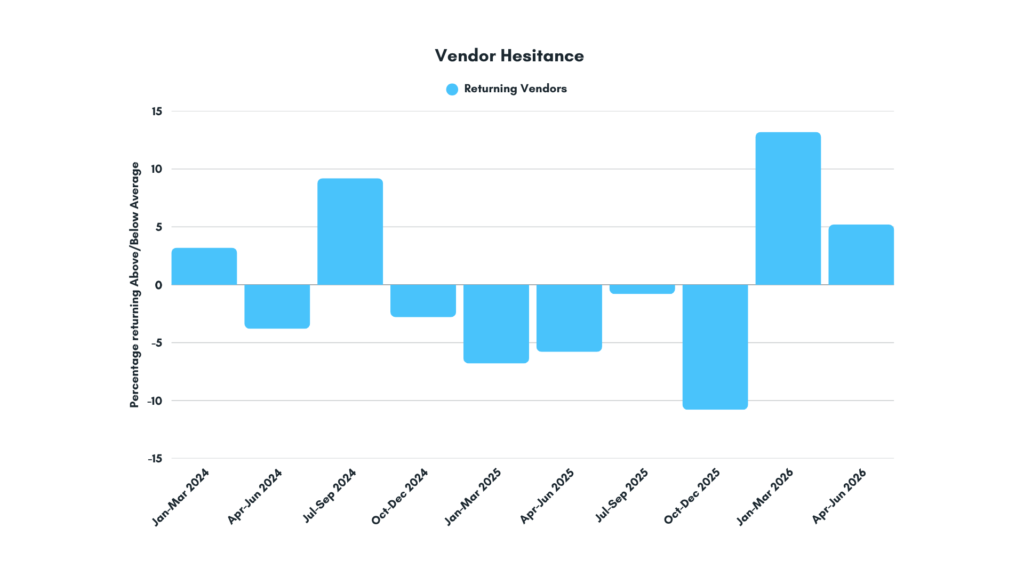
The proportion of vendors returning to us after a previous approach came in above the long-run average again this quarter, though less strongly than in Q1.
Returning vendors are owners who investigated a sale previously, did not proceed at the time, and are now revisiting. A moderate above-average reading suggests previously-hesitant owners are re-entering the market, but not in a rush.
Combined with the Q2 pre-sale velocity numbers, the picture is coherent: the owners returning to the market today are doing so with more clarity than they had the first time around. They are not testing the water. They know what they are back for.
What this means: if you advise a client who explored a sale twelve or eighteen months ago and pulled back, this is a reasonable moment to revisit the conversation. The owners who are returning to the market now are moving decisively. The advisers who reopen the door earliest will be the ones in the room when the decision is made.
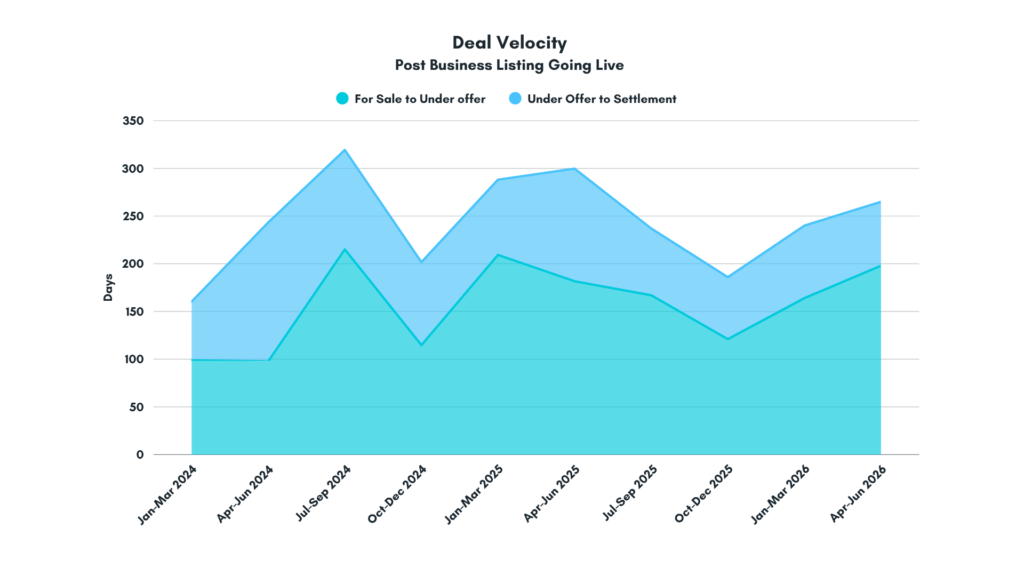
5. Post-sale velocity: offers slower, settlements faster
Once a business is listed, Q2 2026 shows two movements in opposite directions.
Time from listing to receiving an offer has lengthened. This reflects the thinner buyer pool per listing that showed up in section 2. With fewer enquiries per business, the on-market phase is taking longer to yield a serious offer.
But once a buyer commits, the time from under offer to settlement has shortened. Buyers who move are moving decisively. Due diligence and settlement phases are running faster than they were in Q1.
The harder work has shifted. It is now front-loaded into finding the right buyer, rather than into closing the deal once a buyer is at the table.
What this means for sellers: patience through the on-market phase is more important than it was a year ago. But the reward for holding steady is a settlement process that is materially faster once a serious buyer emerges. A well-presented business with clean documentation will not just attract a buyer more quickly; it will convert that buyer to settlement more quickly too.
What this means for your clients
If you are an accountant advising business owners on exit planning, three takeaways matter from the Q2 data.
First: the front of the pipeline has never moved faster. A 55-day enquiry-to-engagement figure is the shortest we have on record. Any client who mentions a sale is likely to move to a signed engagement within weeks, not months. Pre-sale preparation work that used to sit comfortably in a nine-month runway now needs to happen inside a two-month window. That reshapes how you counsel clients who are approaching an exit conversation.
Second: preparation is now the single largest variable in outcome. In a market with thinner buyer pools per listing and buyers who are more selective, the businesses that sell well are the ones that arrive prepared. Financials clean, add-backs documented, systems captured, customer concentration understood, transferable value clear. Six to twelve months of preparation work is still the difference between a business that attracts serious offers and one that sits. That preparation window is best used before the client decides to sell, not after.
Third: the shift is toward decisive markets, not busy ones. Listings are steady. Buyers are more selective. But sellers who are prepared and buyers who are serious are both moving through the process at a pace not seen in the last two years. The market rewards clarity of intent on both sides. Your clients who bring clarity to the sale conversation will move through it faster than the ones who do not.
Bottom line
Q2 2026 describes a market that is tighter on volume but faster on decision-making. Time from first enquiry to signed engagement dropped to 55 days, the shortest figure in the ten-quarter dataset, and total deal length has fallen meaningfully as a result. Listings are steady. Buyers are more selective. But sellers who are prepared and buyers who are serious are moving through the process at a pace not seen in the last two years.
For owners considering a sale, the message is consistent with the last two quarters and clearer now than ever: strong financial records, early preparation, and clear exit planning remain the difference between a business that moves quickly through the market and one that sits.
Coming up: Q3 2026 briefing
Our Q3 2026 Market Pulse briefing lands in the inboxes of Australian accountants in mid-October. It will show whether the pre-sale acceleration we saw in Q2 has held through the third quarter, or whether the picture has shifted again.
If you would like Q3 delivered directly to you when it lands, subscribe via the form below.
If you have a client considering a sale in the next 12 to 24 months and want to talk through what a faster-moving market means for their exit timeline, please call us on 02 9817 3331 or reply to any of our emails.
Keep up to date with what’s happening daily by following Xcllusive on LinkedIn.